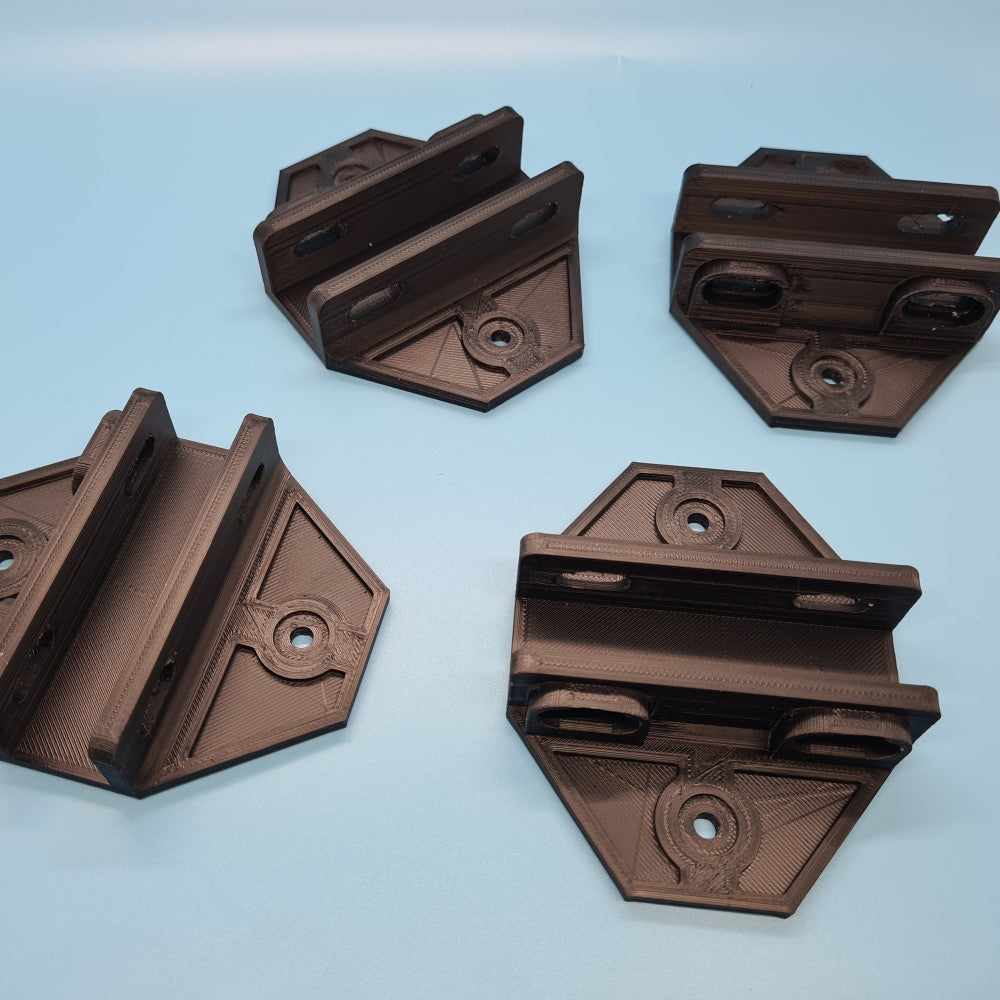
3D Printing Service
Do you have the need to print designs in 3D, but you don't have a 3D printer yourself? The purchase of a 3D printer is relatively high if you only plan to print with it a few times. That is why our 3D Printing service is really something for you! All we ask of you is a 3D design of the desired product, so that we can convert it into a high-quality 3D print. The only restriction we have is the size of our printers. Below you will find all the information you need to make a choice for the desired printing method, the color and the material. You can then request a quote at the bottom of the page, so that we can assess your 3D design and make a quote..
No 3D model but want something 3D printed?
We have a modern 3D scanner that can scan most products. See: 3D Scan Service for more information.
Even if you don't have an object, we can often help you. We have already assisted many companies and individuals with the development of their projects. These projects vary widely; we can help from the initial phase all the way to the final products.
Some examples of our services.
- Scanning a part that then needs to be modified or improved
- Tools or parts needed for process optimization or process improvement.
- Reproducing plastic parts that are no longer available.
- Printing prototypes & small production batches.
- Printing parts that cannot be produced with conventional production methods.
- Bridging long delivery times from your usual supplier, who is often on another continent.
Sectors:
- Prototyping and Product Development: Quickly and cost-effectively create prototypes and finished products, ideal for companies wanting to innovate.
- Architecture and Construction: Print detailed scale models and specific building components.
- Industry: Print machine parts, tools, and production aids.
- Education and Research: Tangible models for educational purposes.
This service is suitable for anyone looking for custom solutions, precision, and innovation.
Printing Methods
-
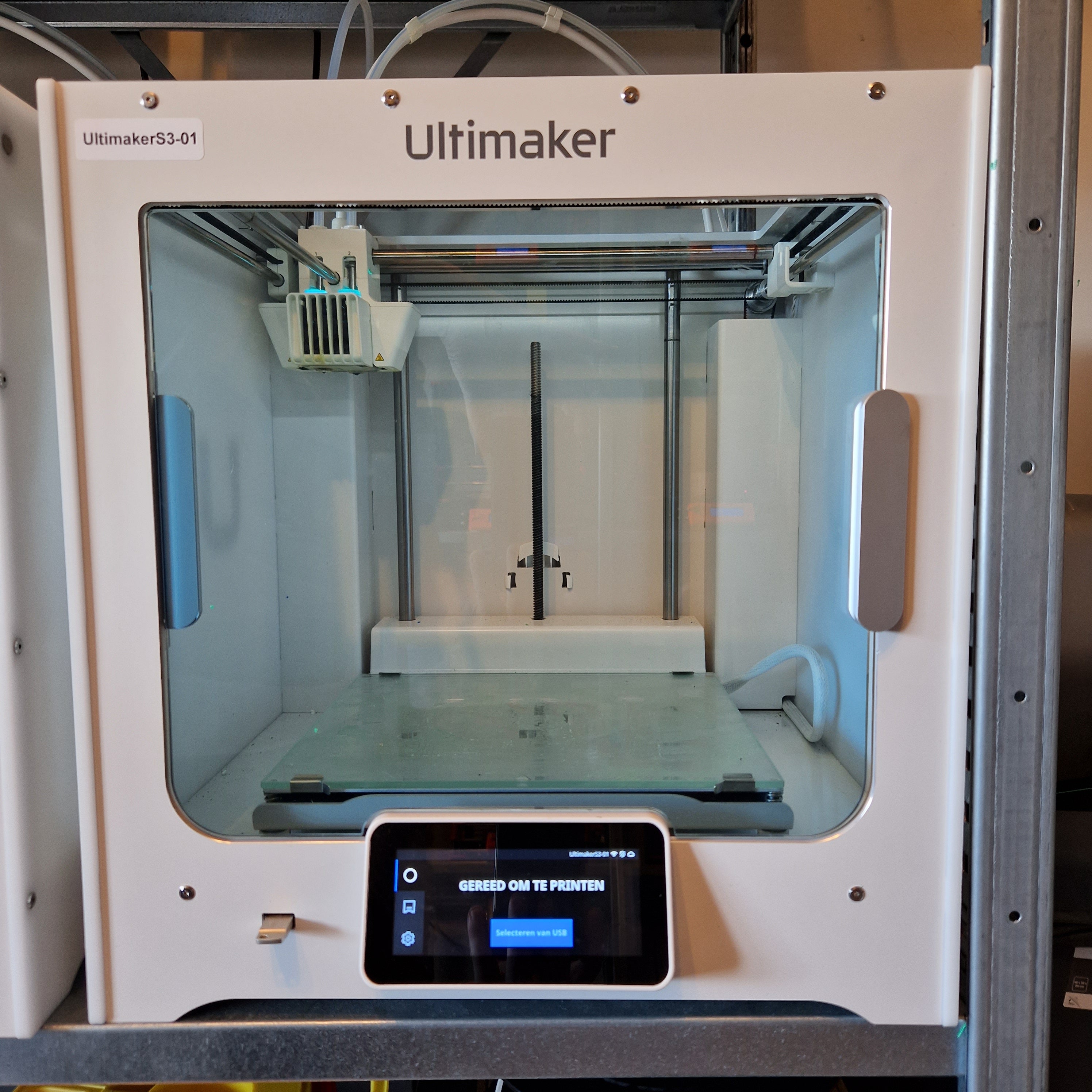
FDM (Fused Deposition Modeling)
FDM is a 3D printing technique in which a movable nozzle (extruder) superimposes a long, thin wire of thermoplastic material. By moving the extruder and/or the platform in a targeted manner, the desired shape is applied, layer by layer. Because the liquid material solidifies after each layer has been applied, the desired shape can thus be built up. In this way a three-dimensional object is created layer by layer.
This technique is mainly used to quickly produce strong products that come very close to injection molded products. -
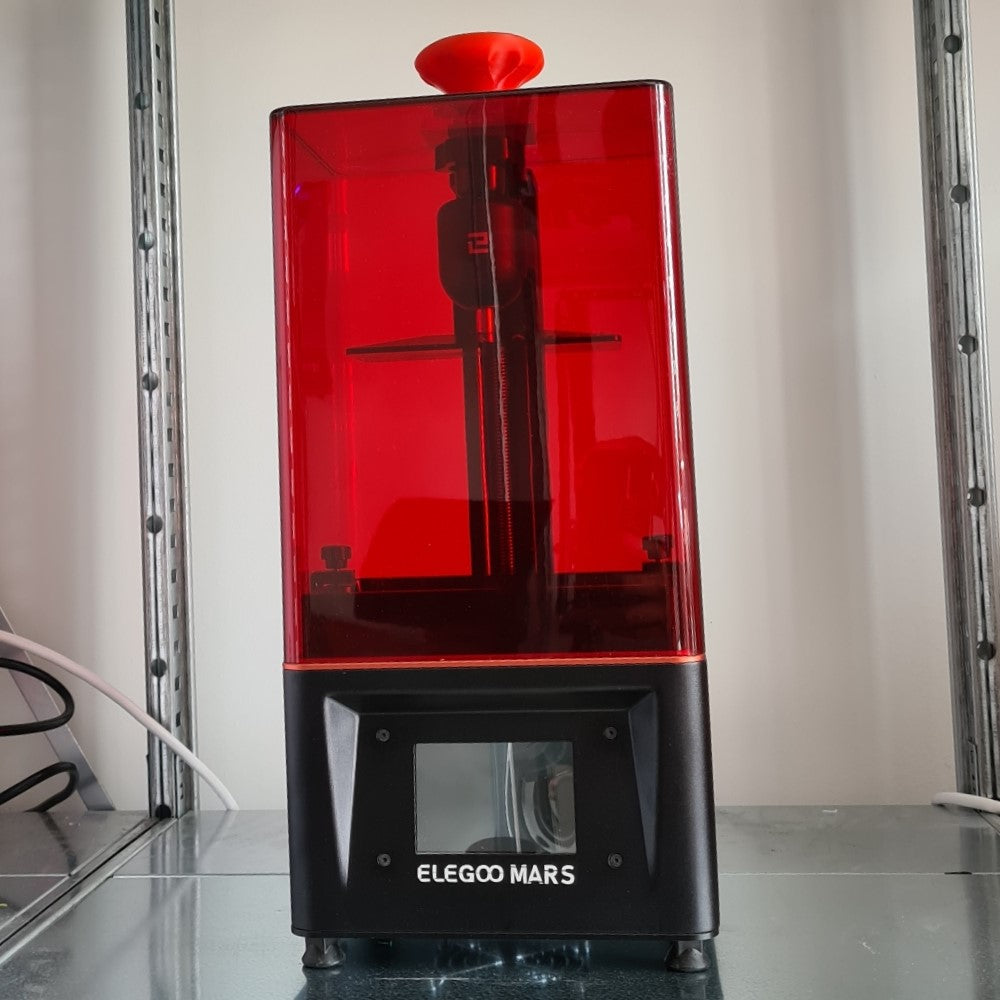
LCD (resin)
LCD is a 3D printing technique in which a complete cross-section of the product is projected with light onto a vessel with liquid material (resin). One layer of material becomes hard and a layer thickness is raised. Then the next layer is exposed and cured, building up the product layer by layer. This process uses very thin pillars that support the overhanging parts of the model. These pillars are easily removed after printing.
The advantage of this technique, compared to FDM, is that it is possible to print in a higher resolution. This ensures high shape and size accuracy and an excellent surface quality, making this technique extremely suitable for small and finely detailed parts.
Dimensions
The only restriction we have for your 3D design is the size of the model. This must be within the dimensions of our printers. Note: This is about the size of one part. So if your design consists of several parts, it is possible that these are printed with the maximum dimensions and then attached/glued together. Different printers are used for the two printing methods described above. This also includes different sizes.
-
FDM printers
Our FDM printers can print models with the following maximum dimensions:
Width: 300mm
Length: 300mm
Height: 300mm -
LCD (resin) printers
Our LCD(resin) printers can print models with the following maximum dimensions:
Width: 120mm
Length: 68mm
Height: 155mm
materials
You can choose from different materials with which you can have your 3D design printed. Below are the materials we use, including the most important features.
PLA : This is the most common and popular material at the moment. With PLA it is possible to print very detailed objects. It is a biodegradable material that is mainly used for products that need to look good, but that are not exposed to high temperatures or forces.
ABS : This is a plastic that is often used for injection molding (for example for the well-known LEGO blocks). ABS is characterized by its high melting point, strength and impact resistance. It is the most used filament for 3D printing after PLA because of its good mechanical properties.
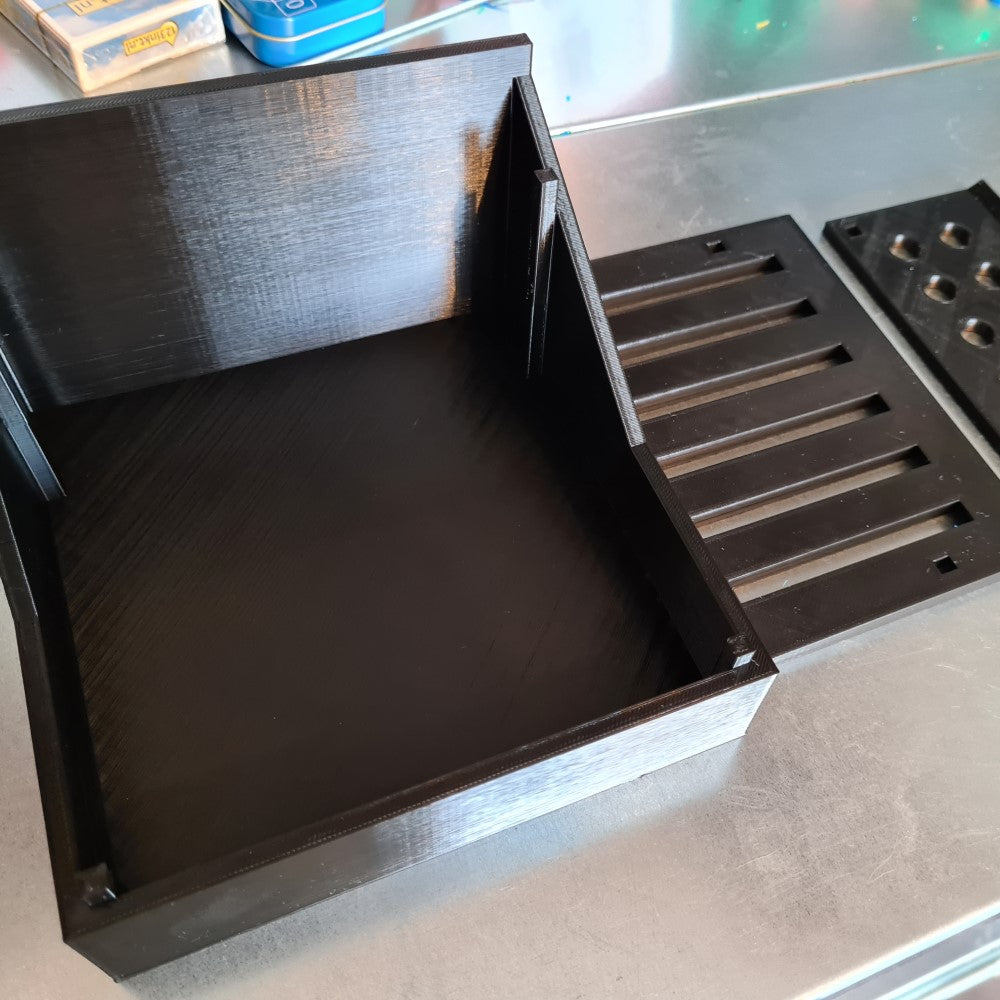
PETG : This is a combination of the properties of PLA and ABS. It is very easy to use and strong. The difference is that it is more flexible and therefore slightly softer, which means that scratches are more likely to occur. In addition, it is a durable type of plastic that is resistant to chemicals.
ASA : This plastic is very strong and stiff and also has a high mechanical resistance. This ensures that there is a high UV and chemical resistance, which makes this material extremely suitable for outdoor use. In addition, ASA hardly ages and shrinks and does not develop a yellowish color when the material is exposed to the sun.
TPU : This is a plastic with a high elasticity, which makes it perfect for products that need to be flexible. An additional advantage is that TPU has good chemical resistance and good UV resistance. We currently have 60 ShD and 42 ShD filament.
Nylon : This is a very stable plastic with a very high surface quality. It is mainly used for end products that need to be very strong. This material can withstand high temperatures and has a very low coefficient of friction.
File types
In order to print your 3D design, we accept different types of files:
.STL -files.
STEP -files
.OBJ -files
If you have one of these file types, you can share it with us and after a quick check we can get started printing your design.
Is your file format not listed here Please take a moment Contact with us!
Various print service examples
-
ABS (FDM)
-
PETG (FDM)
-
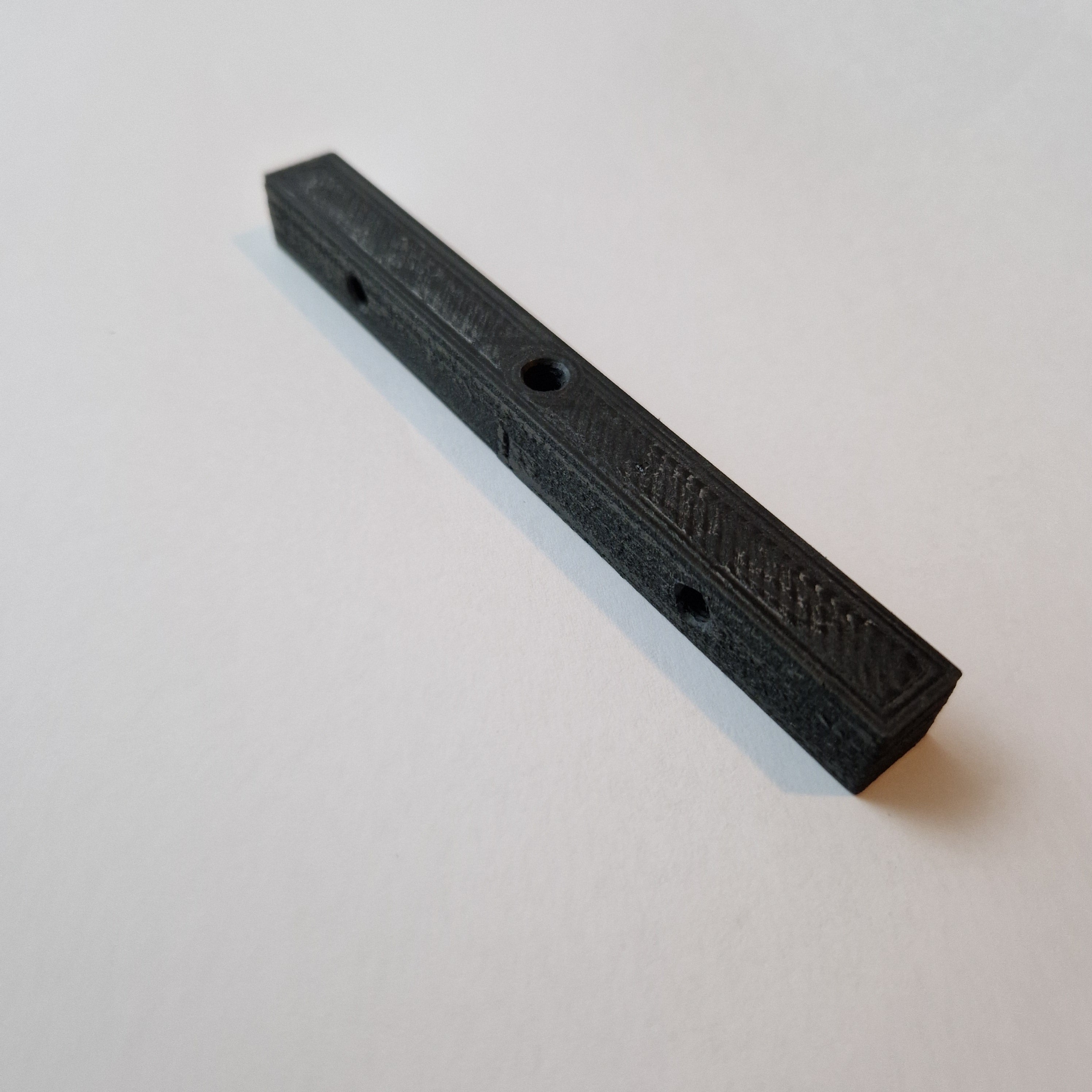
PA CF (FDM)
-
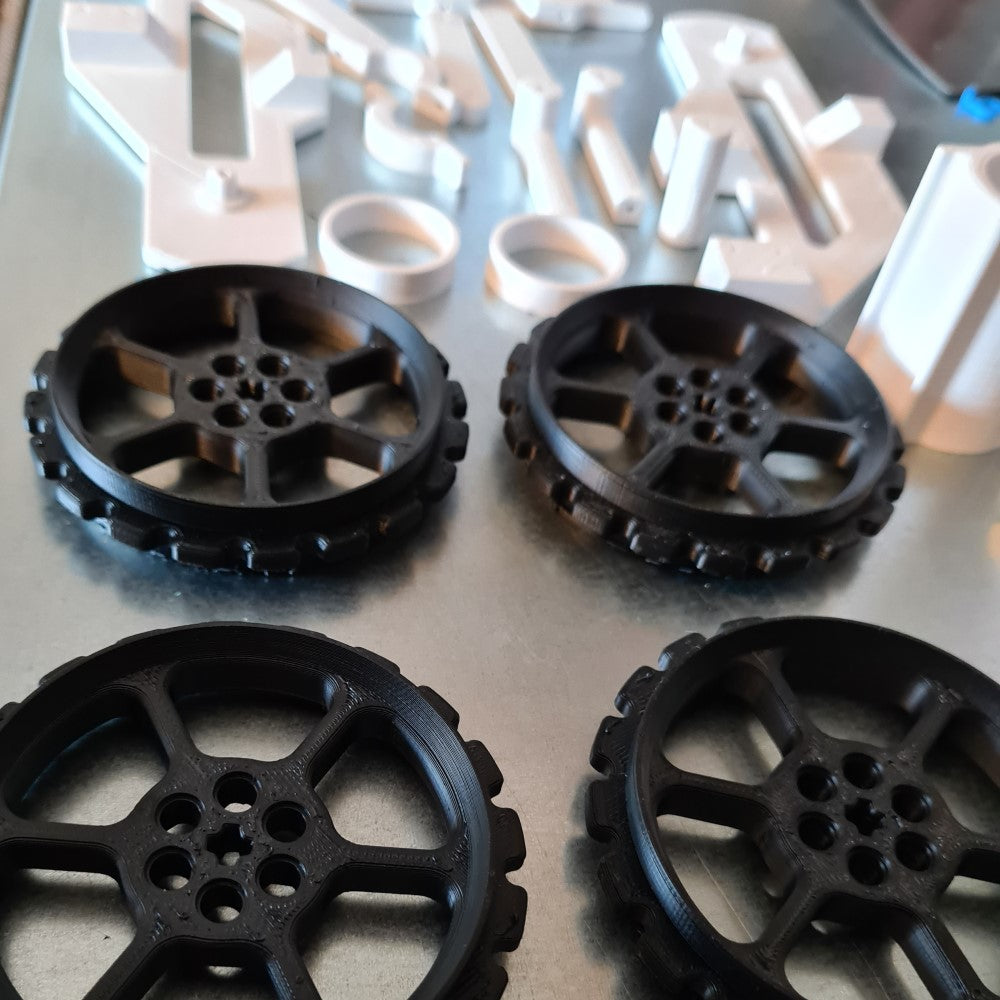
PLA (FDM)